You've found the perfect creator. Their content aligns with your brand, their audience matches your target demographic, and their engagement is through the roof. You send a collaboration offer, they accept, and you're ready to launch. Then, silence. Days turn into a week. The agreed-upon post date comes and goes. Your follow-up emails get lost in the void. The campaign stalls before it even begins, and you're left wondering what went wrong.
This scenario is the silent killer of influencer marketing campaigns. It's not a lack of interest or a negotiation breakdown—it's the black hole of creator communication. For brands investing time and budget, this limbo is frustrating and costly. For creators, an overflowing inbox and chaotic workflow mean missed opportunities and strained professional relationships.
The core issue isn't personal; it's systemic. The very tools we use for outreach—email, Instagram DMs, TikTok messages—are designed for casual conversation, not professional project management. Vital details like contracts, content briefs, payment terms, and deadlines get scattered across different platforms, buried under memes and story replies. A search for "creator CRM" or "influencer outreach management" on platforms like Influqa reveals a growing demand for a better way.
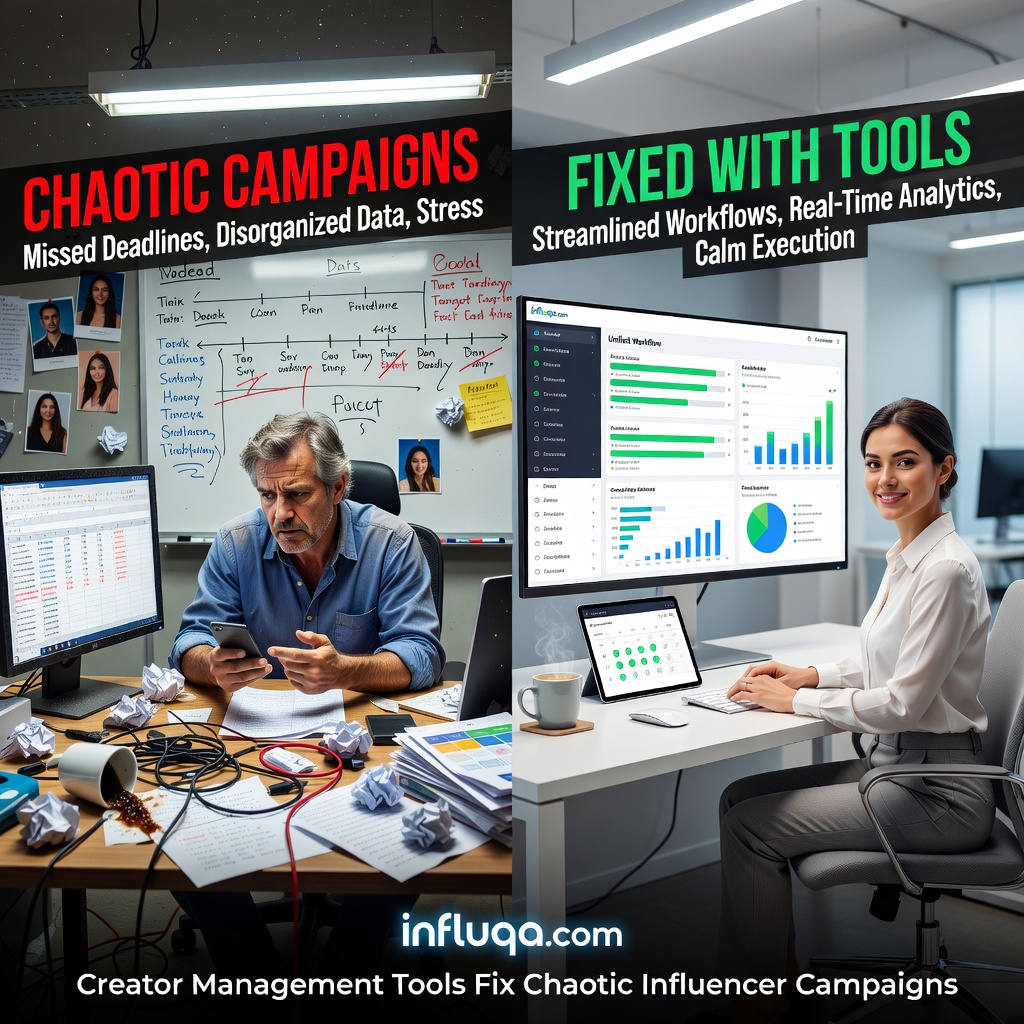
This chaos has a real cost. For brands, it means delayed campaigns, wasted retainer fees, and last-minute scrambles. For creators, it translates to unpaid invoices, confused brand expectations, and a reputation for being unprofessional. The traditional "spray and pray" outreach method exacerbates the problem, creating notification fatigue for creators who can't possibly manage every proposal with equal attention.
Why Your DMs and Emails Are Failing You
Think about your own inbox. How many unread promotional emails do you have? Now imagine you're a creator receiving dozens of collaboration offers weekly, mixed with fan mail, PR packages, and personal messages. The critical path from "interested" to "contract signed" is fraught with friction points.
The Notification Avalanche
Creators, especially those on multiple platforms, are bombarded. An offer on Instagram might get a quick reply, but the follow-up email containing the contract gets lost. A TikTok DM about a urgent timeline is seen but forgotten when switching to YouTube to edit a video. There's no single source of truth for the status of a deal. This isn't a reflection of the creator's professionalism; it's a failure of the process. Platforms like Influqa are built to centralize these conversations, but the habit of reverting to DMs is hard to break.
The Scattered Paper Trail
Where is your agreement? Is it in a PDF attached to email #3? Are the content guidelines in a Google Doc linked in a Twitter DM? Is the payment discussed on a Zoom call noted in a separate notebook? This fragmentation makes accountability nearly impossible. When a deliverable is late, whose court is the ball in? The brand assumes the creator has the details. The creator can't find the specific revision notes. The project grinds to a halt.
Building a Bridge: The Centralized Command Center
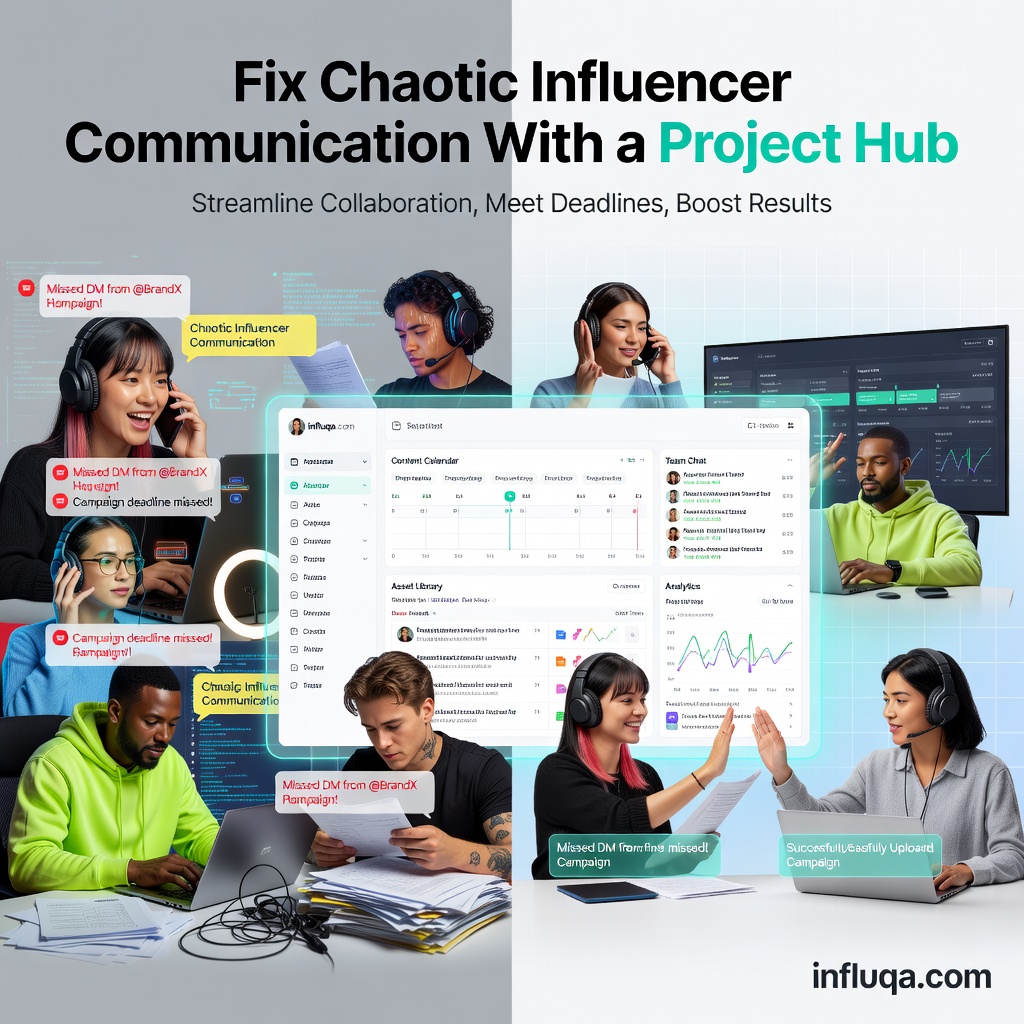
The solution isn't just another messaging app. It's a dedicated, shared workspace for brand-creator partnerships. This concept moves the relationship from a chaotic conversation to a managed project. Here’s how to implement it.
Step 1: Ditch the DMs for Formal Outreach
The first message sets the tone. Instead of a vague "Hey, love your content! DM for collab?" send a structured proposal through a professional platform. This immediately filters you out of the spam folder and into a professional workflow. When you use a service like Influqa's offer system, your proposal arrives with clear terms, deliverables, and compensation already outlined. The creator can review, ask questions, and accept or counter—all in one thread that automatically tracks the status.
Step 2: Create a Single Project Hub
Once a deal is agreed upon, every piece of information should live in one accessible place. This hub should include:
The Final Agreement: A digital contract with terms, timelines, and payment schedules. The Creative Brief: Brand guidelines, key messages, mandatory hashtags, and DOs/DON'Ts. Asset Library: Logos, product images, brand colors, and previous campaign examples. Communication Thread: All discussions about the project, preventing "I never said that" scenarios. Submission & Approval Portal: Where the creator uploads drafts and the brand provides timestamped feedback.
This hub becomes the go-to reference for both parties, eliminating the "which email had that" scavenger hunt.
Step 3: Implement Transparent Milestone Tracking
Break the campaign into clear, sequential milestones with automatic reminders. For example:
Contract Signed & Deposit Sent Creative Brief Acknowledged First Draft Submitted for Review Revisions Completed & Final Approval Content Live on Platform Performance Report Delivered & Final Payment Sent
Each milestone has a deadline and an owner. The system notifies both parties when a milestone is upcoming, completed, or overdue. This creates shared accountability without the need for nagging emails. It turns subjective deadlines into an objective, visible workflow.
The most successful brand-creator partnerships function like a mini-agency. They have a clear project manager, a shared timeline, and a single source of truth for all assets and communication.
The Tools That Actually Work (Beyond Spreadsheets)
While a well-organized Google Sheet is better than nothing, dedicated tools reduce friction exponentially. The goal is to minimize the number of tabs and logins required to manage the partnership.
All-in-One Influencer Platforms
Platforms like Influqa are designed specifically for this workflow. From discovery to payment, the entire lifecycle is managed in one environment. When you sign up for a brand account, you're not just getting a database of creators; you're getting a project management suite. You can send offers, sign contracts, share briefs, and track submissions without ever leaving the platform. For the creator, it means all their professional offers are in one dedicated inbox, separate from their social DMs.
Project Management Adaptations
For larger, ongoing ambassador programs, tools like Trello, Asana, or Notion can be adapted. The key is to invite the creator as a full team member, not just an external guest. Create a shared board with lists for "To Do," "In Review," "Approved," and "Live." Use the comment system for all feedback. This gives the creator a sense of inclusion and clarity on the process. However, this requires the creator to adopt a new tool, which can be a barrier. The advantage of a native influencer marketing platform, as discussed in our blog, is that it's built for this specific use case.
The Human Touch in an Automated System
Technology enables efficiency, but the relationship is still human. The goal of a streamlined system isn't to make interactions robotic, but to free up mental space for meaningful collaboration.
Schedule a Kickoff Call: After the contract is signed but before work begins, have a brief video call. This isn't to reiterate the brief but to build rapport, answer questions, and align energy. It transforms a transactional relationship into a partnership.
Use the System for Logistics, Not Creativity: The centralized hub is for deadlines, guidelines, and submissions. Use it religiously for those items. Then, use a separate, casual channel (like a WhatsApp or Signal group) for brainstorming, sharing inspiration, and casual check-ins. This keeps the project hub clean and functional while fostering a creative partnership.
Celebrate Milestones: When the creator submits a first draft, acknowledge it in the system and send a quick personal message of thanks. When the content goes live, celebrate in the shared channel. The system manages the obligation; you manage the enthusiasm.
Your Action Plan to Eliminate Communication Black Holes
Start your next campaign on the right foot. Don't wait for a missed deadline to fix your process.
Audit Your Current Process: Map out the steps from outreach to payment. How many different apps and platforms are involved? Where do details most often get lost? Choose Your Central Hub: Decide on one primary platform to manage the relationship. For most, an influencer marketing platform like Influqa will be the most tailored solution. For complex programs, adapt a project management tool. Standardize Your Onboarding: Create a template for your project hub that includes the agreement, brief, and asset library. Use it for every single collaboration, regardless of the creator's size. Set Expectations Proactively: In your first communication, explain your process. "Hi [Creator], we use [Platform] to manage all our collaborations to keep timelines and assets organized. I'll send the formal offer there for your review." This establishes professionalism from the start. Review and Iterate: After a campaign, ask the creator for feedback on the process. Was the hub easy to use? Were the milestones clear? Use this to refine your system.
The gap between a great idea and a successfully executed influencer campaign is bridged by professional workflow. Stop letting brilliant collaborations die in the chaos of scattered communication. A structured approach respects everyone's time, protects your investment, and unlocks the true potential of creator partnerships.
Ready to transform your outreach from chaotic to coordinated? Explore how a dedicated platform can streamline your entire process. Discover creators, manage relationships, and execute flawless campaigns all in one place. Browse active collaboration offers or create your brand account on Influqa to experience the difference a centralized command center makes. For more insights on building effective creator relationships, visit our blog.
By adopting a project-management mindset for influencer marketing, you're not just buying a post; you're co-creating a campaign. And that requires a foundation built for collaboration, not confusion. The tools and processes exist. It's time to use them.