You've seen the headlines. A creator in your niche suddenly announces a six-figure brand deal. Another launches a product line that sells out in minutes. Meanwhile, you're posting consistently, engaging your audience, but that leap from content creation to a sustainable, profitable business feels just out of reach. The dream of turning your passion into your paycheck is real, but the path is shrouded in mystery.
This is the core dilemma for countless creators today. The "creator economy" is booming, valued in the billions, yet a significant portion of that wealth flows to a tiny percentage at the very top. For the rest, monetization remains a frustrating puzzle. The problem isn't a lack of effort or talent—it's a lack of a strategic, diversified monetization system.
Many creators fall into the trap of relying on a single income stream, like sporadic brand deals or unstable ad revenue. When that one stream dries up or the platform's algorithm changes, their entire livelihood is at risk. Others spend so much time chasing one-off collaborations that they burn out, leaving no energy to build assets they truly own. The goal isn't just to make money from content; it's to build a resilient, creator-led business that thrives regardless of trends.
Why Your Current Monetization Strategy Might Be Holding You Back
Let's break down the five urgent problems that keep creators stuck in the monetization hamster wheel:
The Feast-or-Famine Cycle: Income is inconsistent, dependent on landing the next brand deal, which leads to financial stress and reactive decision-making. Platform Dependency: Your revenue is tied to the rules and algorithms of a social media platform you don't control. Undervaluing Your Work: Without clear metrics and negotiation skills, you end up accepting low-ball offers that don't reflect your true worth. Time for Money Trap: You're trading hours for dollars directly (e.g., custom content per post) instead of building scalable income sources. Lack of Business Infrastructure: You're a creator acting as a business, but without the systems (contracts, invoicing, client management) to support sustainable growth.
Conversely, the goals of a modern creator-entrepreneur are clear:
Establish 3-5 diverse, reliable income streams. Build assets you own (like an email list, digital products, or a community). Command premium rates based on tangible value, not just follower count. Systematize operations to free up creative time. Transition from "influencer for hire" to a recognized brand in your own right.
Achieving these goals leads to powerful benefits: financial stability, creative freedom, increased authority, a sellable business asset, and ultimately, a career that grows with you, not in spite of you.
The Pillars of a Diversified Creator Income Portfolio
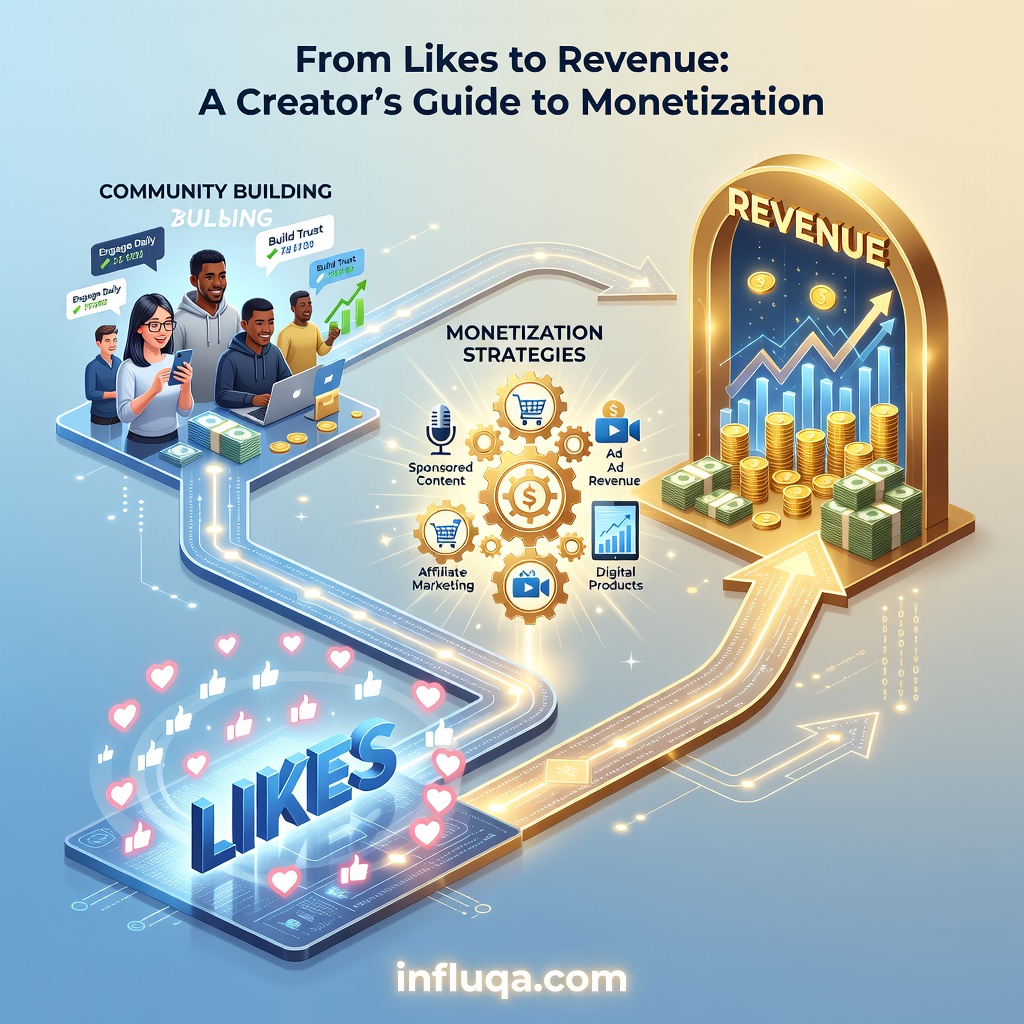
Diversification is your safety net and your growth engine. It means that if one stream slows, others can carry the weight. Here’s how to think beyond the sponsored post.
1. Brand Collaborations (The Foundation)
These should evolve from one-off posts to strategic partnerships. Instead of just promoting a product, think about becoming a true brand ambassador, affiliate, or even a co-creator. The key is to align with brands that resonate so deeply with your audience that the promotion feels like a natural extension of your content. Platforms like Influqa.com are invaluable here, allowing you to explore authentic collaboration offers that match your niche, rather than waiting for opportunities to find you.
2. Digital Products (The Scalable Asset)
This is where you package your knowledge. An ebook, a presets pack, a course, a template library—these products earn money while you sleep. They require an upfront investment of time but provide infinite scalability. Your social media channels become the top of your funnel, guiding engaged followers to a product that solves a specific problem they have.
3. Community & Membership (The Recurring Revenue)
Building a dedicated community, whether through a paid Discord, a Patreon, or a subscription newsletter, creates a predictable monthly income. More importantly, it fosters a deeper connection with your most loyal fans. This direct line to your audience is an asset no platform can take away.
4. Affiliate Marketing (The Performance Engine)
When you recommend tools, books, or services you genuinely use, affiliate links turn those recommendations into a revenue stream. It’s a low-friction way to monetize trust. The key is transparency and selectivity—only promote what you truly believe in.
The most successful creators aren't just personalities; they are micro-entrepreneurs. They understand that their content is the magnet, but their business is built on the systems and assets behind the scenes.
5. Your Own Offerings (The Ultimate Goal)
This could be consulting, coaching, physical merchandise, or even your own software tool. This stream is fully brand-aligned and puts you in complete control of pricing, quality, and customer experience. It’s the culmination of turning your personal brand into a standalone business.
Finding the Right Partners: Quality Over Quantity
A major bottleneck for creators is finding brand deals that are both profitable and authentic. Scrolling through generic influencer platforms or waiting for emails can be inefficient. You need a proactive approach.
This is where a targeted platform makes all the difference. Instead of being one profile in a massive database, you want to be discoverable to brands actively seeking creators in your specific category and region. For instance, if you are a fitness creator based in Canada, brands looking for exactly that can find you on directories like Influqa.com's country-specific listings or browse creators by niche on their category pages.
Focus on platforms that prioritize discovery based on your real metrics and audience demographics, not just vanity follower counts. Reviewing dedicated offer boards for your primary platform, such as Instagram collaboration offers or TikTok brand deals, can surface opportunities that are a direct fit for your content style.
From Proposal to Paycheck: Negotiating Your Worth
Once you find an opportunity, negotiation is critical. Never accept the first offer without considering the full scope of work. Break down your value:
Creation Time: Hours spent scripting, filming, editing. Usage Rights: How long and where will the brand use your content? (This significantly increases value). Audience Access: The quality and engagement rate of your followers, not just the number. Exclusivity: If they want you to avoid competitors, that has a price.
Present your rates confidently, backed by a media kit that showcases your best work, audience insights, and past campaign results. Remember, a brand is not doing you a favor; it's a business transaction where you provide a valuable marketing service.
Pro Tip: Always have a clear contract. Outline deliverables, timelines, payment schedule, kill fees, and usage rights. It protects both you and the brand and ensures you get paid for your work.
Building the Machine: Systems for Sustainable Growth
Monetization at scale requires moving from a chaotic "creator" mindset to an organized "CEO" mindset. This means implementing systems:
Content Batching: Dedicate specific days to creating multiple pieces of content at once. Automation Tools: Use schedulers, email auto-responders, and CRM tools to manage audience and brand interactions. Financial Tracking: Separate your personal and business finances. Use simple accounting software to track income from each stream and expenses. Idea & Asset Repository: Keep a running document of content ideas, past successful pitches, and reusable templates (for contracts, invoices, emails).
These systems reduce mental load, prevent burnout, and create space for you to focus on high-level strategy and creative work—the things that actually grow your business.
The Long Game: Your Creator Brand as a Legacy
The final stage of monetization is transcending it. When you have multiple streams flowing and systems running, your focus shifts from "how do I get paid?" to "what impact do I want to have?" This is where you can launch passion projects, mentor other creators, or use your platform for advocacy.
Your brand becomes a legacy—a business that can potentially operate independently of you daily, or even be sold. This is the ultimate freedom that a strategic monetization plan unlocks.
The journey from creator to entrepreneur is a process of layering. Start by solidifying one income stream, then strategically add another. Use resources designed to connect talent with opportunity, like Influqa.com's influencer discovery platform, to fuel your collaboration pillar. Analyze what your audience needs most and build a product around it. Most importantly, start thinking of yourself not just as a content maker, but as the founder of your own media company.
The tools and opportunities are more accessible than ever. The difference between those who monetize and those who build a lasting business is a plan, a portfolio, and the perseverance to execute it. Your content has value. It's time to build a business that reflects that.