You know that feeling. You’ve found a creator whose content you love. Their authenticity is magnetic, their community is devoted, and their influence is undeniable. As a brand, you see the perfect alignment. You reach out, negotiate a deal, and launch a campaign. The content goes live. And then… crickets. The engagement is flat. The sales don’t materialize. The return on investment is a mystery wrapped in a spreadsheet.
This scenario is the silent killer of influencer marketing budgets. It’s not a failure of the creator or even the product. It’s a failure of measurement. In the rush to tap into creator magic, brands often skip the crucial step of defining what success looks like and how to track it. The result? Wasted resources and a growing skepticism about the entire channel.
This problem is magnified when working with nano and micro-influencers, whose value often lies in highly engaged, niche communities rather than vanity metrics. Without the right tools and framework, proving their impact becomes guesswork. This is where a strategic, data-informed approach separates successful collaborations from expensive experiments.
Why Vanity Metrics Are a Vanity Project
Likes, follows, and even comments are the currency of social media, but they are terrible indicators of business value. A post with 10,000 likes from an audience outside your target demographic is worthless. A surge in followers during a campaign doesn’t pay the bills if those new followers never convert.
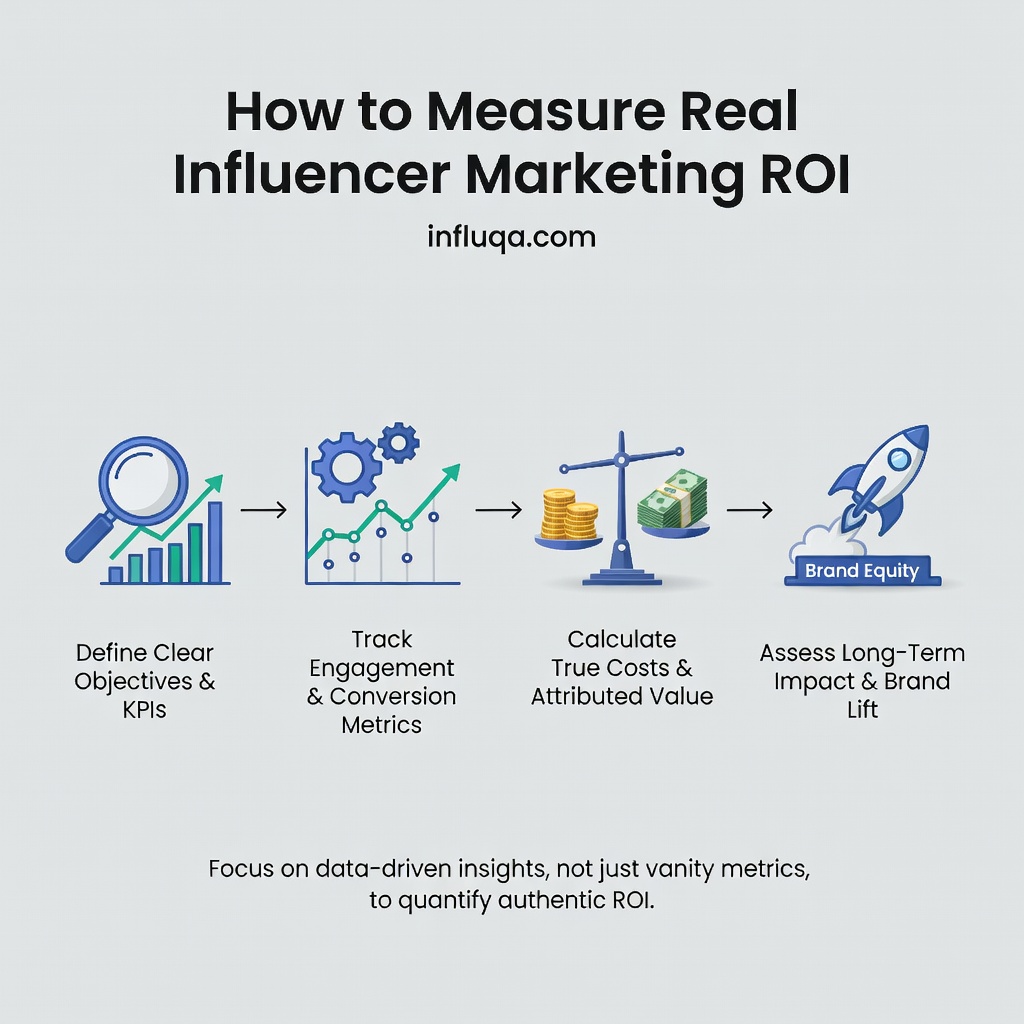
The real goal is to move beyond surface-level analytics and connect influencer activity to tangible business outcomes. This requires shifting the conversation from "How many people saw this?" to "What did this make people do?" Did they visit your website? Sign up for your newsletter? Use a discount code? These are the actions that fuel growth.
The Five Pillars of Measurable Influencer ROI
To build a system that works, you need to measure across multiple dimensions. Think of it as building a complete financial report, not just checking your bank balance.
Audience Quality & Alignment: Does the creator’s follower demographic match your ideal customer profile? Tools on platforms like Influqa.com allow for deep dives into an influencer’s audience interests and authenticity, helping you avoid mismatched partnerships before a contract is signed. Engagement Rate (The Right Way): Calculate engagement based on meaningful actions (saves, shares, link clicks) relative to the creator’s reach in your specific niche, not just their total follower count. Website Traffic & Attribution: Use trackable links (UTM parameters) and dedicated landing pages. Monitor referral traffic in your analytics to see exactly which creator is driving visits. For more on setting this up, our Influqa documentation has step-by-step guides. Conversions & Sales: This is the holy grail. Utilize unique discount codes, affiliate links, or trackable promo links for each influencer. This directly ties revenue to a specific collaboration. Brand Lift & Sentiment: Measure changes in brand awareness, perception, and sentiment through social listening tools and post-campaign surveys. Did mentions of your brand increase? Was the sentiment more positive?
Building Your Tracking Framework From The Ground Up
Start simple. You don’t need an enterprise software suite on day one. Define one or two key performance indicators (KPIs) that directly support a business goal. Is the campaign for a new product launch? Your primary KPI might be conversions using a unique code. Is it for rebranding? Focus on sentiment analysis and share of voice.
The most effective influencer ROI tracking is proactive, not reactive. You set the measurement parameters before the first piece of content is briefed, not after it's already live.
Communication with the creator is key here. Be transparent about what you’re tracking and why. Most professional creators appreciate this clarity—it shows you’re serious and value their work as a business channel, not just a marketing stunt. You can discover creators who are experienced with performance-based collaborations by browsing active collaboration offers on our platform.
The Tools You Actually Need
You can cobble together a powerful tracking system without a massive budget:
Google Analytics 4: Non-negotiable. Set up campaigns with UTM parameters to track traffic sources. Platform Native Insights: Instagram, TikTok, and YouTube offer robust built-in analytics for business accounts. Use them to understand post performance. Discount/Promo Codes: Simple, effective, and directly tied to sales. Most e-commerce platforms have this functionality built-in. Dedicated Landing Pages: Create a unique page (e.g., yourbrand.com/creator-name) for each campaign to track visits and conversions cleanly. Influencer Marketing Platforms: As you scale, a platform like Influqa becomes essential. It streamlines discovery, negotiation, content tracking, and performance reporting in one place, turning chaos into clarity.
The Long Game: Lifetime Value and Relationship ROI
The deepest ROI often isn’t captured in a single campaign report. It’s in the ongoing relationship with a creator who becomes a true brand advocate. A creator who genuinely loves your product will create authentic content for years, influencing their audience repeatedly.
This is where tracking evolves. Look at the customer lifetime value (LTV) of audiences acquired through specific creators. Do customers referred by a particular influencer have a higher average order value? Do they stick around longer? This data transforms a creator from a vendor into a strategic growth partner.
Finding these long-term partners starts with smart discovery. Instead of just looking at follower counts, use category filters to find creators whose passion aligns with your niche. Explore options like searching for influencers by category or even by country for geo-targeted campaigns.
Pro Tip: The Benchmark Secret
You can’t know if you’ve succeeded if you don’t know your starting point. Before any campaign launches, document your baseline metrics. What is your current website traffic from social media? What is your average engagement rate on posts? What is your conversion rate? This baseline is your benchmark for measuring true incremental lift from influencer marketing.
Turning Data Into Decisions and Dollars
Collecting data is only half the battle. The other half is analysis and action. Schedule a post-campaign debrief with your team and, if possible, the creator. Review what the data says:
Which content format (Reel, TikTok, Story, long-form video) drove the most conversions? What was the peak time for engagement and clicks? Which call-to-action (CTA) was most effective?
This isn’t about assigning blame for underperformance; it’s about learning and optimizing for the next campaign. This iterative process is how you build a scalable, profitable influencer marketing program. For a deeper dive into optimizing different platforms, check out our analysis of TikTok collaboration trends.
Ultimately, proving influencer marketing ROI is about speaking the language of your business. It’s about translating likes, shares, and comments into leads, sales, and loyal customers. It demystifies the creator economy and positions it as the powerful, performance-driven channel it truly is.
Ready to move beyond guesswork? The foundation of any measurable campaign is finding the right partners. Start your search with intention on a platform built for meaningful connections and clear results. Explore Influqa.com today to discover authentic creators, manage your collaborations, and finally track the real impact of your influencer partnerships. You can begin by creating your free account and browsing active opportunities.
For more insights on building a sustainable strategy, visit our blog or learn more about our mission to connect brands with the right creators.