You’ve just run an influencer campaign. The posts looked beautiful, the comments were positive, and the creator’s follower count was impressive. But when your boss asks for the return on investment, you find yourself scrambling. Likes don’t pay the bills, and followers aren’t a currency. This is the universal hangover of the vanity metric era—a realization hitting brands and agencies worldwide.
The trending search data doesn’t lie. Marketers are actively seeking ways to move beyond surface-level analytics. They’re asking how to measure influencer performance in a way that connects to real business goals. If you’re tired of guessing and ready to start knowing, this deep dive is for you. We’re building a modern playbook for analyzing creator impact, one that values resonance over reach and conversions over clout.
Why Vanity Metrics Are a Broken Compass
Follower count, likes, and even comments are what we call vanity metrics. They’re easy to manipulate, often inflated, and tell you very little about actual influence. A creator with a million followers might have less genuine reach than one with a hundred thousand dedicated fans. The first step in influencer performance analysis is admitting that these numbers, while shiny, are frequently misleading.
Fake followers and engagement pods have commoditized the appearance of popularity. Brands that don’t dig deeper are essentially paying for empty numbers. This isn’t just inefficient; it risks damaging your brand’s credibility by association. Your campaign’s success shouldn’t be a guessing game. It should be a calculated outcome, starting with the due diligence you do on platforms like Influqa.com to discover authentic creators.
The Due Diligence Checklist
Before you even discuss rates, your analysis should begin. Here’s what to scrutinize:
Engagement Rate vs. Follower Count: Calculate the true engagement rate (Likes + Comments / Followers). Look for consistency, not just one viral post. Audience Quality: Are the comments generic (“Nice!” “Great pic!”) or thoughtful and conversational? Do followers ask questions related to the content? Growth History: Use tools to check for sudden, unnatural spikes in followers, which can indicate a purchase. Brand Affinity: Has this creator worked with your direct competitors or complementary brands? How did those collaborations look and perform?
The Core Framework: Measuring What Actually Matters
Shift your mindset from broadcasting to connecting. The goal is to measure how an influencer moves their audience to think, feel, or act differently toward your brand. This framework is built on three pillars: Engagement Quality, Conversion Tracking, and Audience Alignment.
When you browse collaboration offers on Influqa's offers page, look past the listed follower count. Ask for their audience demographics report and examples of past performance analytics.
1. Engagement Quality: The Depth of Interaction
Move beyond counting likes. Analyze:
Saved & Shared Rates: On Instagram, saves and shares are strong indicators of value. A user saving a post plans to return to it. Comment Sentiment & Length: Use simple sentiment analysis. Are comments asking for product details? Sharing personal experiences? This is high-intent engagement. Story Engagement: Polls, question boxes, and swipe-up links (or link sticker taps) provide direct, measurable interaction. A high response rate here signals an attentive audience.
2. Conversion Tracking: The Ultimate Proof
This is where influencer ROI measurement becomes clear. You must track the customer journey.
Trackable Links & Codes: Every influencer should have a unique UTM parameters, discount code, or affiliate link. This is non-negotiable for performance campaigns. Website Analytics: Monitor traffic spikes from the influencer’s platform. Look at bounce rate and time on site—did they send qualified visitors? Sales Attribution: Connect the dots from click to purchase. How many conversions came directly from the influencer’s audience? What was the average order value?
For a deep dive on setting up tracking, our Influqa documentation offers technical guides for brands.
3. Audience Alignment: Beyond Basic Demographics
An influencer’s audience might be the right age and gender, but are they in the right mindset? You need psychographic alignment.
Platform Analytics: Use the creator’s native insights (like Instagram’s Professional Dashboard) to see top locations, age ranges, and most active times. Content Affinity: What other accounts does this audience follow? What hashtags do they use? Tools can help you see if their interests overlap with your brand’s world. Growth Source: Did the influencer gain followers from viral sounds on TikTok, YouTube tutorials, or Instagram Reels? This tells you what content format resonates most.
Building Your Performance Dashboard
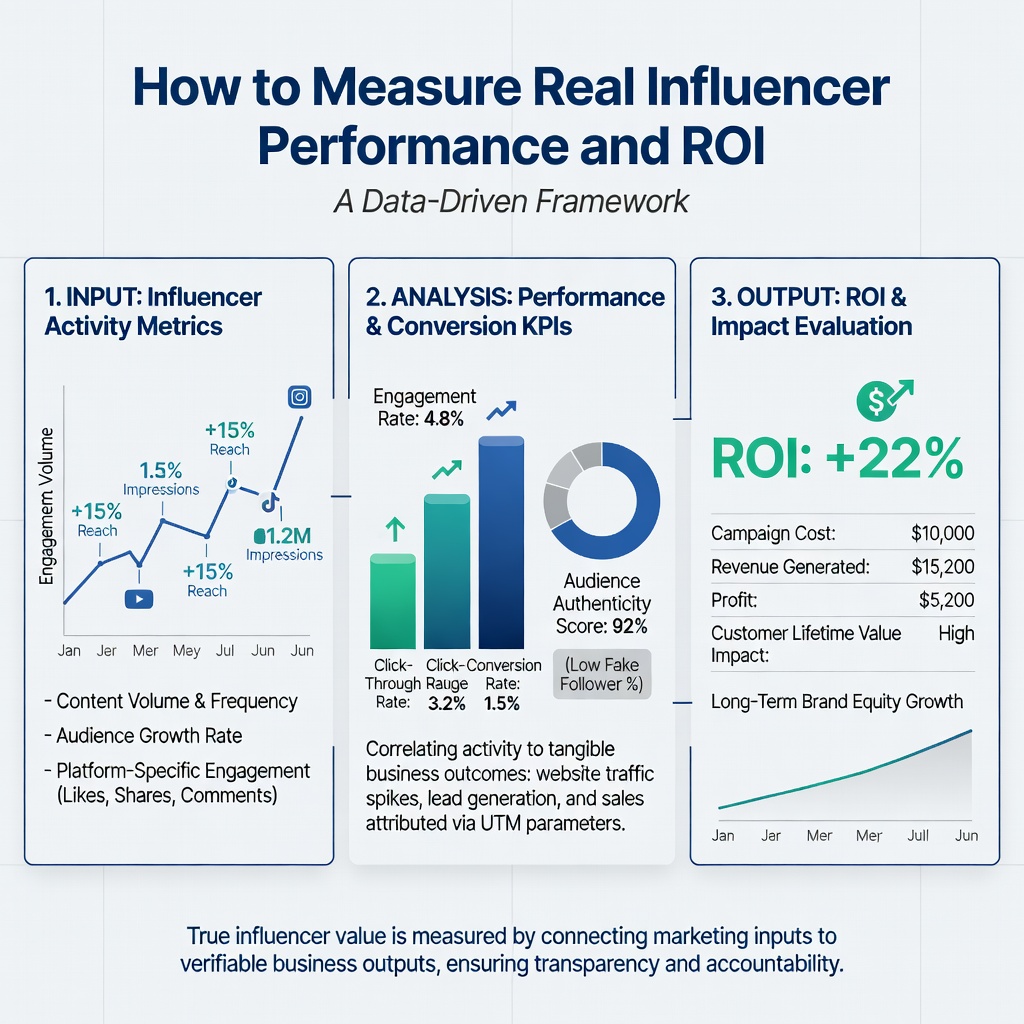
You don’t need a dozen expensive tools. Start with a simple spreadsheet or dashboard that tracks these key performance indicators (KPIs) for every campaign:
Reach & Impressions: The potential scale. Engagement Rate (Quality-Weighted): (Meaningful Comments + Saves + Shares) / Reach. Click-Through Rate (CTR): Clicks on your link / Impressions of the link. Conversion Rate: Purchases or Sign-ups / Clicks. Cost Per Engagement (CPE) & Cost Per Acquisition (CPA): Total Spend / Total Engagements or Acquisitions. Earned Media Value (EMV) & ROI: (Value of outcomes / Total Spend) x 100.
This dashboard becomes your source of truth. It allows you to compare a nano-influencer on TikTok to a macro-influencer on YouTube apples-to-apples, based on business impact. When you’re ready to manage these partnerships, you can sign up for Influqa to streamline discovery and communication.
The most sophisticated brands we work with at Influqa don’t just look at a campaign’s direct ROI. They track the lifetime value of customers acquired through influencers, often finding it’s higher due to built-in trust and social proof.
The Long Game: Analyzing for Relationship Building
The final, often overlooked, layer of analysis is relationship capital. Did this collaboration feel seamless? Was the creator professional, timely, and creative? Did their audience respond well to your brand’s integration?
This qualitative data informs your long-term strategy. Finding a creator who is a true brand fit is more valuable than ten one-off posts with mediocre performers. Use your analysis to identify these potential ambassadors. Build a roster of go-to creators who understand your brand and deliver consistently. Explore influencers by category on our platform to find creators already passionate about your niche.
Remember, your analysis should be a feedback loop. The results from one campaign should directly inform the brief for the next. Why did that unboxing video outperform the styled photo shoot? Why did the TikTok drive more site traffic than the YouTube review? Ask these questions relentlessly.
Moving beyond vanity metrics isn’t just a tactical shift; it’s a strategic imperative for modern marketing. It transforms influencer marketing from a cost center into a predictable, scalable, and highly effective growth channel. It builds partnerships based on data and mutual success, not just popularity.
Start applying this framework to your next campaign. Audit the creators you’re considering with a critical eye. Set up robust tracking before you launch. And measure everything against the goals that matter to your business’s bottom line.
Ready to find creators who are measured by more than just a follower count? The journey begins with discovery. Influqa.com is built to help brands like yours connect with authentic influencers, analyze real performance potential, and build campaigns that deliver measurable results. Dive into our blog for more strategic deep dives, or start exploring creators today to put this analysis into practice.