You’ve seen the headlines. A beloved creator announces a sudden, indefinite hiatus. A viral TikTok star posts a tearful video about burnout. The conversation around creator mental health isn't just trending—it's a fundamental shift in how we understand success in the digital space.
For brands and marketers, this presents a new, critical layer to influencer collaborations. It’s no longer just about reach and engagement rates. The most sustainable, authentic, and effective partnerships are now built on a foundation of mutual well-being. Ignoring the human behind the handle isn't just unethical; it's a strategic misstep that can damage your brand reputation and campaign results.
So, how do you build campaigns that drive metrics and support creator mental health? How do you move from being just another brand in the inbox to becoming a trusted, supportive partner? The answer lies in a more mindful, human-first approach to influencer marketing.
Why Creator Burnout is a Brand Problem
Think of your favorite creator. Now imagine their process: constant content ideation, filming, editing, community management, algorithm chasing, brand negotiations, and the pressure to always be "on." It's a 24/7 job with no HR department. When a creator burns out, the effects ripple outward.
For a brand, a burnt-out creator partner might mean missed deadlines, a drop in content quality, or a forced, inauthentic delivery that audiences can spot instantly. Worse, if a creator feels exploited or overwhelmed by a collaboration, they may speak out about it, turning what should be positive brand exposure into a public relations challenge.
This is why platforms like Influqa.com are evolving. It's not just a directory of influencers; it's a gateway to building healthier professional relationships. By understanding the pressures creators face, you can use tools like exploring collaboration offers to structure partnerships that are realistic and respectful from the start.
The Pressure Points: Where Collaborations Can Go Wrong
Several common campaign elements can unintentionally exacerbate creator stress:
Unrealistic Timelines: Demanding quick-turn content without considering a creator's existing schedule. Content Micromanagement: Stripping away creative autonomy, which is often a creator's primary source of job satisfaction. Vague Briefs & Scope Creep: Unclear expectations that lead to endless revisions and added, uncompensated work. Ignoring Platform Nuances: Forcing a YouTube-style script onto a TikTok creator, ignoring the unique pressures of each platform's production pace. The "Always On" Expectation: Assuming 24/7 availability for comments and DMs as part of the deal.
Building a Mindful Collaboration Framework
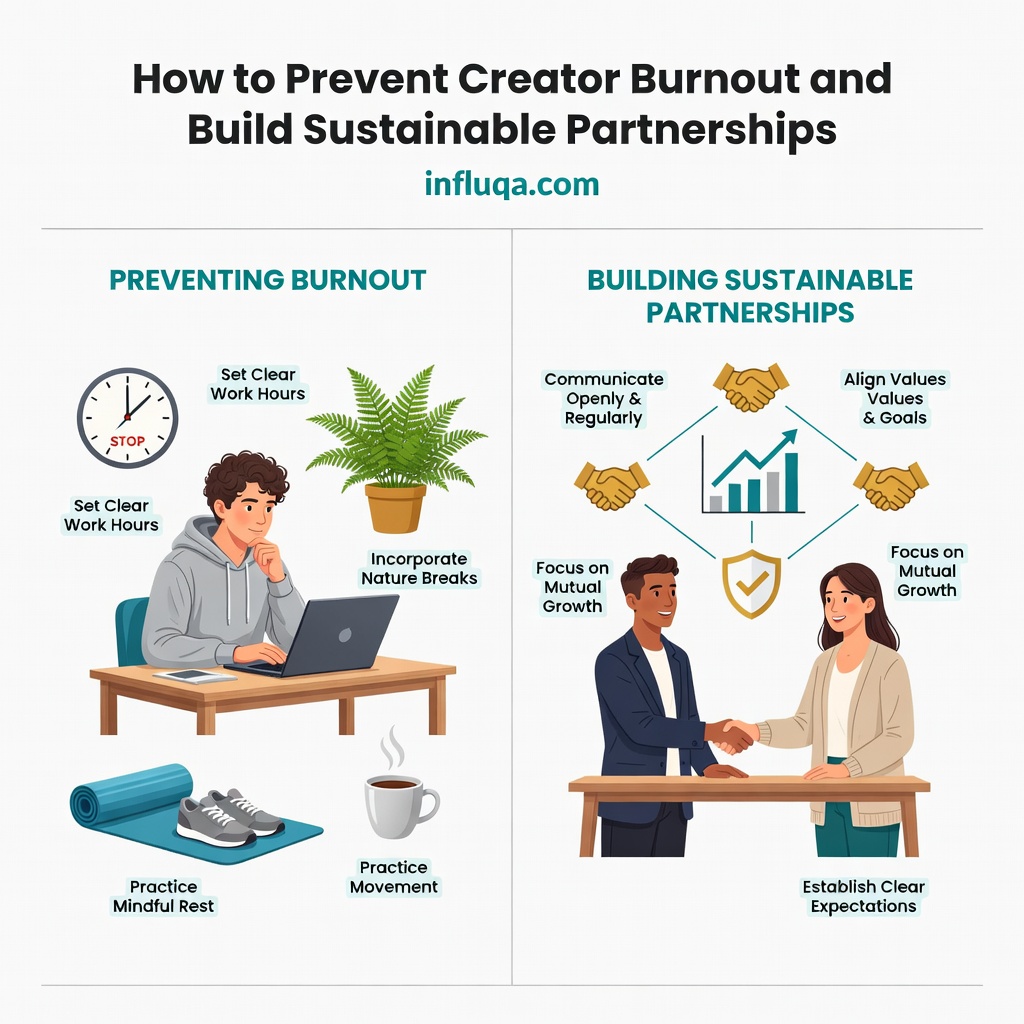
Transforming your approach requires intentionality. Here is a practical framework for embedding mental health awareness into your influencer strategy.
1. Vet for Well-being, Not Just Metrics
During the discovery phase on platforms like Influqa, look beyond follower count. Observe a creator's recent content rhythm. Have they posted about taking breaks? Is their tone consistent, or does it seem strained? When you reach out, frame initial questions around their workflow. Ask about their ideal timeline or what a supportive brand partnership looks like to them.
2. Co-create Realistic Briefs & Timelines
The brief is your first contract of trust. Instead of a rigid list of demands, frame it as a collaborative document. Clearly define:
Core Message & Brand Non-Negotiables: What must be included? Creative Freedom Zone: Where can the creator's unique voice shine? A Realistic Production Timeline: Build in buffer days for review and revisions. Fixed Number of Revisions: State it clearly (e.g., "two rounds of minor edits") to prevent endless back-and-forth.
This clarity reduces anxiety and sets the stage for a smooth process.
3. Respect Platform-Specific Workloads
A long-form YouTube video involves scripting, filming, and editing that can take weeks. A TikTok trend might be produced in a day but requires constant cultural awareness. Tailor your expectations and compensation accordingly. When searching for partners, consider using platform-specific filters, like looking for TikTok collaboration offers or Instagram creators, to find experts who work in a format that aligns with your campaign's realistic demands.
The most valuable asset a creator has is their authentic voice and energy. A campaign that protects that asset will yield far better returns than one that drains it.
4. Implement "No-Contact" Periods & Clear Communication Channels
Specify working hours for feedback. Avoid sending notes late at night or on weekends. Designate a single point of contact from your brand to prevent the creator from being pulled in multiple directions. This simple structure is a profound sign of respect for a creator's time and mental space.
5. Compensate Fairly and Promptly
Financial stress is a major contributor to anxiety. Fair pay isn't just ethical; it's a direct investment in the quality of your campaign. Offer clear, upfront payment terms and stick to them. Prompt payment after deliverables are approved is one of the simplest ways to build immense goodwill and trust.
The Long-Term Benefits of a Mindful Approach
When you prioritize a creator's well-being, the benefits extend far beyond a single campaign.
Higher Quality Content: A supported, less-stressed creator brings more creativity and authenticity to their work. Authentic Advocacy: Creators who feel respected become genuine brand advocates, often promoting the partnership beyond the contracted scope. Stronger Long-Term Relationships: You build a roster of trusted, happy creators eager to work with you again, saving time and vetting costs on future campaigns. Positive Brand Reputation: Word travels in the creator community. Being known as a "good brand to work with" attracts top-tier talent. Campaign Resilience: Projects are less likely to derail due to burnout-related issues, protecting your marketing timeline and investment.
This approach transforms influencer marketing from a transactional exchange into a strategic partnership. It’s about viewing the creator not as a media channel, but as a creative professional whose well-being is integral to your shared success.
Getting Started with Human-First Partnerships
The journey begins with a shift in perspective. On your next campaign, use a platform like Influqa.com not just to find a creator who fits a demographic, but to connect with creators whose values and content style resonate with your brand's ethos. Read their profiles, watch their recent videos, and ask yourself: "Does this person seem passionate and balanced? How can our collaboration add to their career, not just extract from it?"
Start small. Choose one element of the mindful framework—like implementing a clear revision limit or setting communication hours—and apply it to your next collaboration. Notice the difference in the working relationship and the final content.
Influencer marketing is at its best when it’s a true collaboration. By making creator mental health a non-negotiable part of your strategy, you build more sustainable campaigns, foster incredible creativity, and contribute to a healthier ecosystem for everyone. It’s the future of marketing, and it starts with seeing the human behind the hashtag.
Ready to find creators who are the right fit for authentic, sustainable partnerships? Begin your search with intention on Influqa.com, where connecting with professionals is designed to be the first step in building a campaign that works for everyone.