Key Takeaways
- Platform verification confirms identity, not audience quality or content fit. Multi-layer verification is the only way to predict campaign performance.
- Mid-tier creators (50K–500K followers) carry the highest fake engagement risk — they charge premium rates but often evade fraud detection.
- Verification is not a one-time event. Re-check creators every 90 days or before each campaign. Audiences change, and bots accumulate.
- Build verification into your workflow. The best approach automates checks so they're never skipped or forgotten.
Table of Contents
- What "Verified" Actually Means (And Doesn't Mean)
- The 3 Layers of Creator Verification That Actually Matter
- The "Verification Stack" — Tools and Checks Brands Should Use
- Red Flags That "Verified" Creators Still Show
- How to Build a Verification Workflow That Scales
- The Cost of Skipping Verification (Real Numbers)
- Verification Best Practices for Different Creator Tiers
- How Platforms Simplify Multi-Layer Verification
- The Future of Creator Verification (2026 and Beyond)
- Common Mistakes to Avoid
- Frequently Asked Questions
- Further Reading
What "Verified" Actually Means (And Doesn't Mean)
Let me be direct: the blue checkmark is not a quality badge. It's an identity badge.
When Instagram, TikTok, or YouTube gives a creator that verified checkmark, they're saying one thing: "We've confirmed this account belongs to the person or brand it claims to represent." That's it. No one at the platform checked whether their audience is real. No one verified that their engagement comes from actual humans. No one evaluated whether their content converts.
Platform verification is an identity check, not a quality check
Here's the dirty secret most brands miss: platform verification teams don't audit follower quality. They don't run bot detection. They don't analyze comment authenticity. They check ID documents and look for media coverage. Period.
I've worked with a verified creator who had 200,000 followers and a 2.1% engagement rate. On paper, that looks solid. But when I dug into their comments, 68% were generic emoji spam — 🎉🔥💯 from accounts with no profile pictures and zero posts. Bot farms. The verification badge gave them credibility, but their audience was hollow.
The verification gap
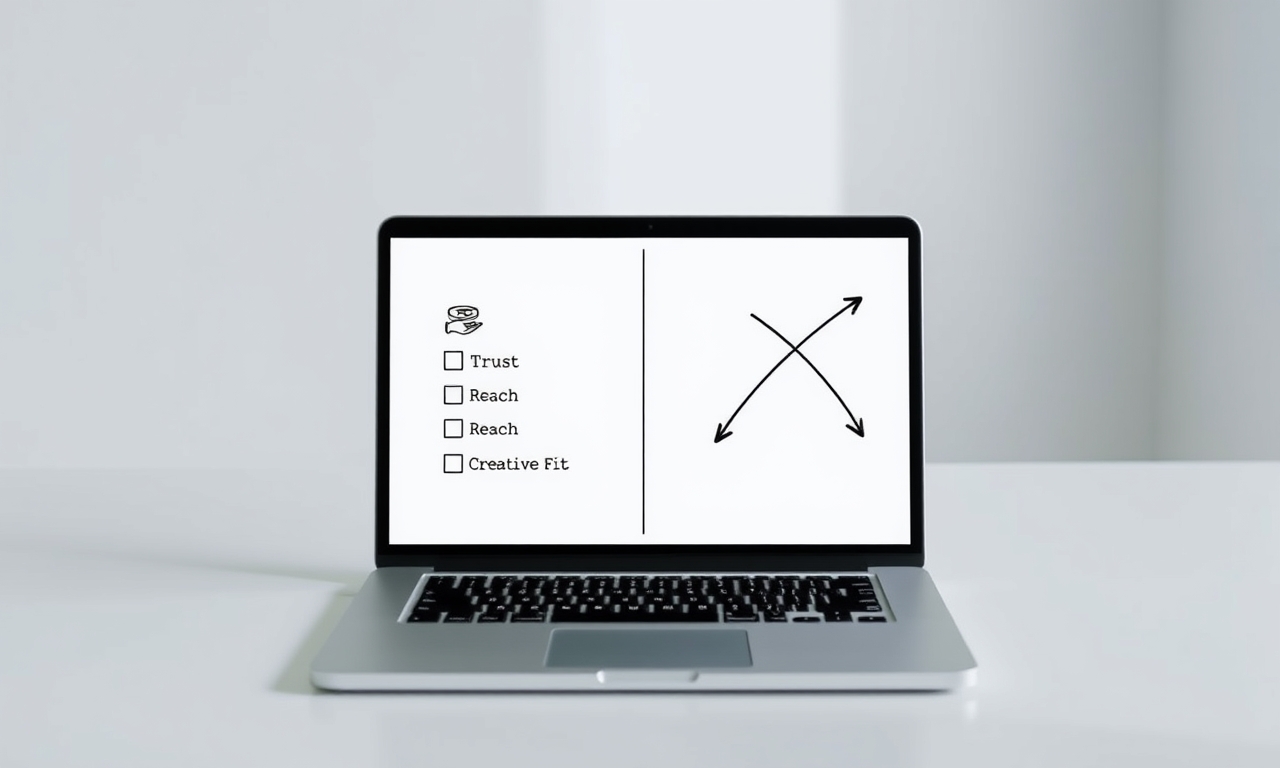
Most brands stop at platform verification. They see the checkmark and think "good to go." But you're missing three critical layers:
- Audience authenticity — Are the followers real people?
- Engagement quality — Do interactions come from genuine interest?
- Content alignment — Does their style match your brand voice?
A 2026 survey by Influencer Marketing Hub found that 68% of brand marketers reported working with a "platform-verified" creator who still delivered below-average engagement or had suspicious follower growth patterns. That's more than two-thirds of brands burned by trusting the badge.
Why "verified" creators still fail
The problem is psychological. When you see that checkmark, your brain relaxes. You think "they've been vetted." So you skip the deeper checks. You approve the contract. You send the payment. And then you wonder why the campaign flopped.
The checkmark creates a false sense of security. It's the most dangerous thing in influencer marketing right now.
The 3 Layers of Creator Verification That Actually Matter
If you want to predict campaign performance, you need a verification system that goes beyond the badge. Here's the framework I've used across hundreds of campaigns.
Layer 1 — Identity & Authenticity
This is where platform verification lives. But you need to go deeper.
Confirm the creator is a real person with a real history. Look for:
- Consistent posting patterns over months or years
- No sudden follower spikes (more on this later)
- A natural follower growth curve, not a hockey stick
Tools like Social Blade or platform APIs can pull this data in minutes. Don't skip this step even for verified accounts.
Layer 2 — Audience Quality
This is where most brands fail.
You need to check for:
- Bot followers — Accounts with no posts, generic usernames, or suspicious patterns
- Inactive accounts — Followers who haven't posted in months or years
- Geographic mismatches — A creator with 80% US followers but 90% of their engagement coming from countries where your product isn't sold
The key metric? Follower-to-engagement ratio. A creator with 100K followers and 500 likes per post has a 0.5% engagement rate. That's suspicious. Real audiences engage at higher rates, especially for micro-creators.
Layer 3 — Content & Brand Fit
Here's what most people don't realize: you can have perfect audience metrics and still fail.
Content mismatch is the #1 reason verified creators underperform in campaigns. I've seen a verified beauty creator with 300K engaged followers absolutely tank a fitness brand campaign. Her audience loved makeup tutorials — they didn't care about protein powder.
Verify that:
- Their content style matches your brand voice
- Their past brand collaborations align with your category
- Their audience sentiment is positive (not just high engagement)
A 2026 benchmark report by Aspire found that brands using a 3+ layer verification process see 31% higher campaign ROI and 47% lower creator churn compared to brands using single-layer verification. Those numbers are too big to ignore.
The "Verification Stack" — Tools and Checks Brands Should Use
You don't need a massive budget to verify creators effectively. Here's what works at every level.
Free checks every brand can do
Spend 10 minutes per creator. Here's your checklist:
- Scroll their recent 20 posts — Read the comments. Are they real conversations or generic praise?
- Calculate engagement rate manually — (Likes + Comments) / Followers × 100. Do this for their last 10 posts. Look for consistency.
- Check follower growth — Use a free tool like Social Blade. Look for spikes. A jump of 30K followers in 48 hours is a red flag.
- Review their followers — Click into their follower list. Do the accounts look real? Profile pictures? Posts? Bio text?
This 10-minute manual check catches issues that expensive tools miss — especially fake engagement patterns.
Paid tools worth the investment
For high-budget campaigns, invest in audience quality reports. Platforms like HypeAuditor, Modash, or InfluencerDB run deep analysis on follower authenticity, engagement quality, and audience demographics.
A single report costs $10–$50 per creator. Compare that to the $10K+ you might spend on a campaign. It's cheap insurance.
Platform-native verification vs. third-party
When can you trust platform data? For low-budget campaigns with nano-creators (under 10K followers), platform metrics are usually reliable. These creators rarely have fake followers.
For mid-tier and above, always pull independent reports. Platforms have financial incentives to keep creator counts high. They're not going to flag suspicious accounts aggressively.
Red Flags That "Verified" Creators Still Show
Even verified creators display warning signs. Here's what to watch for.
The sudden follower spike
A verified creator who gained 30K followers in 48 hours likely bought bots. Real growth is gradual. It comes from viral posts, collaborations, or consistent content. It doesn't happen overnight.
Check their growth chart. If you see a vertical line, walk away.
Engagement rate inconsistency
Real creators have consistent engagement. If one post gets 0.5% engagement and the next gets 8%, something is wrong.
The most common pattern: paid engagement on specific posts. A creator buys likes or comments on posts they know brands will review. The rest of their content sits at natural levels.
Comment-to-like ratio anomalies
Healthy accounts show a predictable ratio. For every 100 likes, you might see 2–5 comments. If likes are high but comments are nearly zero, the audience isn't genuinely engaged.
Worse: if comments are all generic emoji strings or "Great post!" from accounts with no profile pictures, you're looking at a bot farm.
Some verified creators maintain fake engagement loops through "engagement pods" — private groups where creators artificially inflate each other's metrics. Verification doesn't catch this. Manual review does.
How to Build a Verification Workflow That Scales
You can't manually check every creator when you're running 50 campaigns a month. You need a system.
Create a tiered verification system
Basic checks (all creators):
- Platform verification status
- Identity confirmation
- Engagement rate calculation
Deep checks (campaigns over $1K):
- Audience quality report
- Follower growth analysis
- Content fit review
Full audit (campaigns over $10K):
- Third-party verification report
- Past campaign performance data
- Brand safety scan
Automate where possible, manual-check where it matters
Use tools for follower growth and engagement metrics. But never automate content fit or comment quality review. Those require human judgment.
Set a re-verification cadence
Here's the part most brands ignore: re-verify creators every 90 days or before every new campaign.
A creator who passed verification six months ago could now have 40% bot followers. Audiences change. Bots get added. Accounts get hacked. Past verification doesn't guarantee current quality.
The Cost of Skipping Verification (Real Numbers)
Let me put some numbers behind this.
Wasted budget on fake engagement
According to a 2026 study by cybersecurity firm CHEQ, brands lost an estimated $1.3 billion globally to influencer fraud. Fake engagement — bots, click farms, paid interactions — accounts for roughly 15% of all influencer campaign interactions.
That means for every $10,000 you spend on influencer marketing, $1,500 goes to bots.
Damaged campaign data
Fake engagement doesn't just waste money. It poisons your data.
When you measure campaign performance against bot-driven impressions, your metrics are meaningless. You can't calculate true ROI. You can't optimize future campaigns. You're making decisions based on garbage data.
Brand safety risks
A verified creator with hidden controversial content can damage your brand. Verification doesn't include content history checks. I've seen brands partner with verified creators who had racist tweets, political extremism, or adult content buried in their history.
The cost of poor verification isn't just wasted spend. It's bad data that leads to bad decisions for months or years of future campaigns.
Verification Best Practices for Different Creator Tiers
Not all creators need the same level of scrutiny. Here's how to tier your approach.
Nano & micro-creators (1K–50K)
Focus on engagement quality and content fit. These creators rarely have fake followers — the ROI of buying bots at this level is too low. But they may lack professional experience.
Check: Content quality, brand alignment, communication responsiveness.
Mid-tier creators (50K–500K)
This is where fake engagement is most common. These creators have enough followers to justify high fees but not enough brand scrutiny to deter fraud.
Prioritize: Audience quality checks, growth pattern analysis, engagement consistency.
Mid-tier creators are the riskiest group. They charge premium rates but often fly under the fraud detection radar.
Macro & celebrity creators (500K+)
Verification is table stakes at this level. Focus on brand safety, past collaboration performance, and audience overlap with your target market.
Check: Content history, past campaign results, audience demographics.
How Platforms Simplify Multi-Layer Verification
The best verification system is one built into your workflow — not a separate step you have to remember.
Some platforms pre-vet creators before listing them. Every profile on the platform has already passed identity verification and basic quality checks. You're not starting from scratch.
Transparent metrics matter too. Look for platforms that show engagement quality, audience demographics, and past campaign performance — not just follower count. Vanity numbers don't predict results.
And here's something most brands overlook: escrow-backed payments. When funds are held in escrow until campaign completion, you have leverage. If a verified creator underdelivers, you don't pay. That's a powerful incentive for creators to maintain quality.
The Future of Creator Verification (2026 and Beyond)
The verification landscape is changing fast. Here's what's coming.
AI-driven fraud detection
Machine learning models can now detect bot patterns, fake engagement, and account anomalies in real-time. These systems get smarter every month. Within two years, manual bot detection will be obsolete.
Blockchain-based identity verification
Emerging solutions use blockchain for immutable creator identity and campaign performance records. Once verified, that data can't be altered. This could eliminate identity fraud entirely.
Industry-wide verification standards
There's a growing push for standardized creator verification protocols across platforms and marketplaces. The goal: one verification that works everywhere.
But here's the honest truth: platforms themselves are the slowest to solve this problem. They have financial incentives to keep creator counts high. Third-party verification will become the industry standard before platforms fix it themselves.
Common Mistakes to Avoid
1. Trusting "verified" as a quality signal
The most expensive mistake. Brands assume verification means the creator is professional, reliable, and effective. It doesn't. It only confirms identity.
2. Over-relying on automated tools
Many brands buy a single tool report and consider verification "done." Automated tools miss context — comment quality, content alignment, brand fit — that only manual review catches.
3. Verifying creators but not their audience
Brands check the creator's profile but never look at who's actually following them. A creator with 100K followers might have 60K bots and 40K followers in the wrong geography. You're paying for reach you'll never get.
Frequently Asked Questions
Can a creator be platform-verified but still have fake followers? Yes. Platform verification confirms identity, not audience quality. Many verified creators have significant bot followings.
What's the fastest way to check if a creator's engagement is real? Scroll their last 20 posts and read the comments. Real engagement includes conversations, questions, and specific feedback. Fake engagement uses generic emojis and praise.
How much time should brands spend on verification per creator? 10–15 minutes for basic checks. 30–60 minutes for deep audits on high-budget campaigns. It's time well spent.
Do verification tools guarantee 100% accuracy in detecting fake followers? No. No tool is perfect. The best approach combines automated tools with manual review.
Should brands pay more for verified creators compared to non-verified? Not automatically. Verification doesn't correlate with performance. Pay based on audience quality, engagement rates, and content fit — not badge status.
Further Reading
- The Verification Trap: 5 Checks That Most Brands Skip — Internal guide on common verification blind spots
- The Creator Discovery Playbook: A Step-by-Step System — How to find and vet creators efficiently
- CHEQ's 2026 Influencer Fraud Report — External research on fake engagement and bot detection
Ready to build a verification system that actually predicts performance? Start with creators who've already passed the first layer of checks. Explore verified creator profiles on Influqa and see the difference pre-vetted talent makes in your campaigns.